The Endoscopic submucosal dissection (ESD) It is an advanced technique that allows the removal of certain lesions from the digestive tract. Minimally invasive. Its great advantage is that it facilitates the extraction of the injury in a single piece, This allows for a much more precise analysis of its characteristics.
However, not all digestive injuries can be treated with this technique. Its indication depends on a specialized evaluation which takes into account the size, location and depth of the injury.
What is endoscopic submucosal dissection (DSE)?
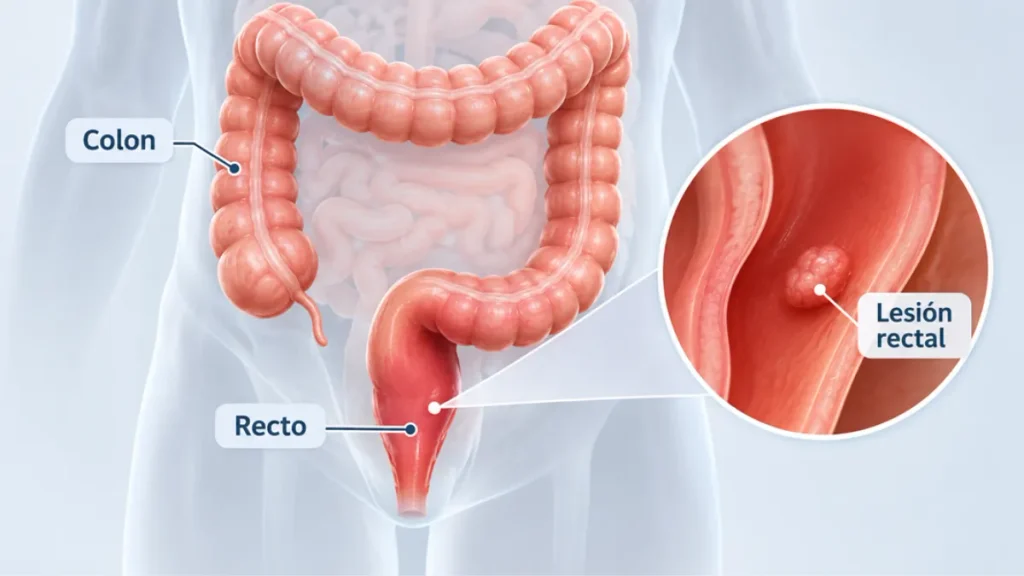
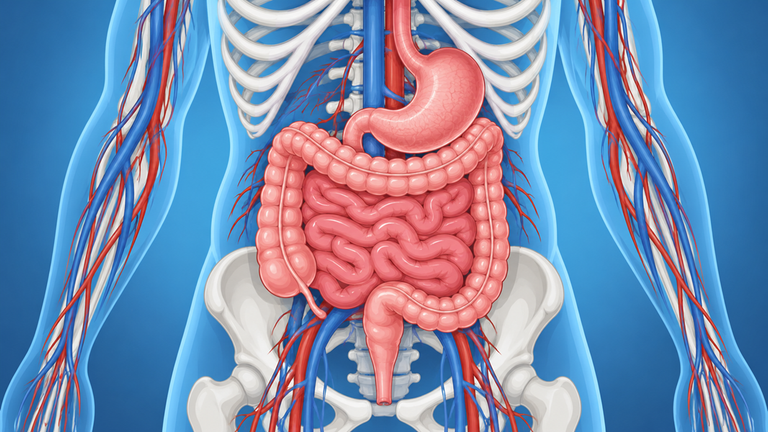
The Endoscopic submucosal dissection (ESD) It is one of the techniques of Advanced endoscopy in Madrid which allows the treatment of certain digestive disorders with precision. It is used primarily in selected cases of disorders of the esophagus, stomach, colon and rectum, Especially when it is important to obtain a complete injury for further study.
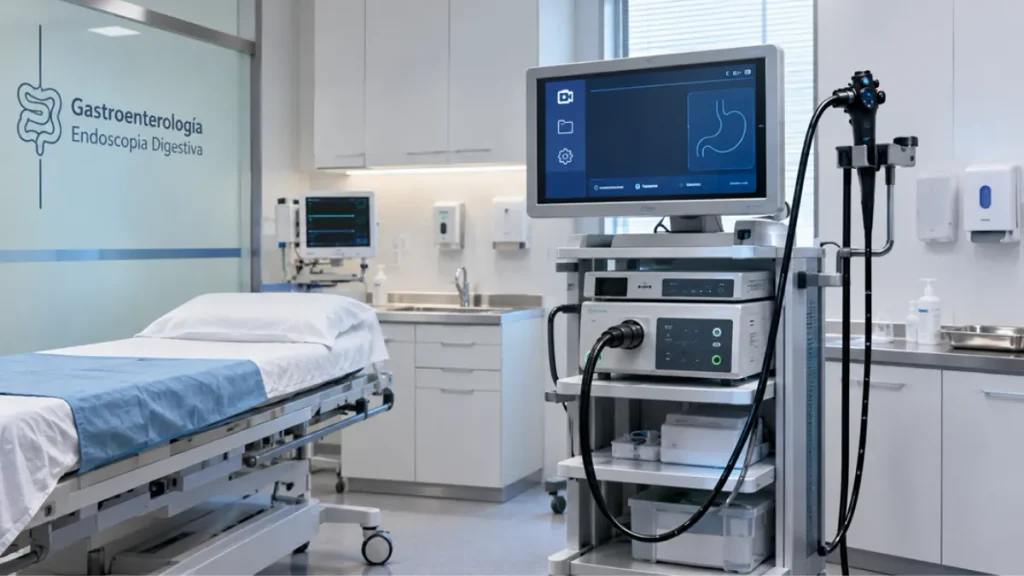
During the intervention, the specialist inserts a Flexible endoscope Equipped with a camera and precision tools. With it, he accesses the affected area and carefully separates the injury from the tissues located under the mucosa.
How is it different from other endoscopic techniques?
There are several procedures for removing digestive lesions, such as Conventional polypectomy HelloEndoscopic mucosal resection (EMR). What distinguishes the DSE is that it allows for block resection, Even in some larger injuries: the tissue is extracted in one piece instead of being fragmented.
This is particularly important when there is suspicion of precancerous changes or of one Surface tumor lesion, Because it facilitates a more complete anatomical-pathological evaluation.
How are the cases selected for a DSE to be conducted?
The choice of this technique requires a individualized assessment. It is not enough to detect an injury during an endoscopy: it is necessary to study its characteristics to determine whether DSE is the most appropriate option.
Size and characteristics of the injury
Size is a relevant factor, but not the only criterion. Some large injuries can be treated with other endoscopic techniques, while others injuries Smaller ones may require a DSE due to their characteristics. The specialist analyzes aspects such as:
Size: Extension of the injury to the digestive surface.
Morphology: if it is flat, elevated or has depressed areas.
Location: the region of the digestive system in which it is located.
Surface appearance: presence of patterns that suggest changes in the tissue.
Suspicion of invasion: The possibility that the injury has reached deeper layers.
The goal is to decide whether it is possible to have one Complete and safe extraction by endoscopic means.
Advanced endoscopic evaluation
Endoscopy of high definition It allows observing details of the surface of the injury that are not always visible to the naked eye. Additionally, techniques such as chromoendoscopy They help identify mucosal abnormalities and assess possible signs of invasion.
When doubts persist about the extent of the injury, the medical team may request Additional tests. However, these They are not routinely required before all endoscopic resections.
When can DSE not be indicated?
The DSE is primarily directed at Selected superficial injuries. If there are signs of Deep invasion or suspects of ganglionic lesion, Therefore, the decision must consider both the characteristics of the injury and the patient's general health. General condition of the patient and the risks of the procedure.
How is endoscopic submucosal dissection performed?
The DSE is held in a specialized endoscopy unit, It involves specific instruments and professionals with experience in advanced therapeutic techniques. Although it may vary depending on the location and characteristics of the injury, the procedure usually consists of five phases:
Identification of the injury: The area to be treated is located and examined.
Definition: The edges are marked to plan a proper extraction.
Submucosal injection: A solution is introduced that separates the mucosa from the deeper layers.
Dissection: The injury is gradually separated using endoscopic instruments.
Extraction The piece is removed and sent to the pathology laboratory.
During the procedure, the treated area is also examined to detect possible bleeding points or other complications. The duration depends on the location, size, and complexity of the injury.
What information does the resection of a digestive injury provide?
The DSE not only allows the treatment of certain injuries: it also provides fundamental information for diagnosis. After extraction, the tissue is analyzed under the microscope in the laboratory. pathological anatomy.
Type of injury and cellular characteristics
The study identifies the nature of the injury and determines whether there are benign, precancerous or malignant changes. It also allows the recognition of cellular features relevant to establishing the definitive diagnosis.
Depth of invasion
It is essential to know to what layer of tissue the lesion extends. This data allows us to distinguish between lesions limited to the mucosa and those that have reached the submucosa; in the case of superficial cancer, it is one of the criteria that help assess the risk of residual disease or spread.
Rectional margins
The analysis checks whether the edges of the piece are free of injury. negative margins They indicate that no lesion cells are identified at the examined edges. Nevertheless, this result should be interpreted together with other factors, such as the Depth of invasion and the Microscopic characteristics.
Is any further treatment necessary?
The anatomical pathology results allow evaluating whether the resection is sufficient or whether additional tests, follow-up or treatments should be performed. In certain malignant lesions, the tumor markers are also analyzed. lymphatic invasion, the degree of cellular differentiation and other risk indicators.
Therefore, The complete removal of an injury does not always mean that the treatment has ended..
What happens after a DSE?
After the procedure, the patient remains in observation The time determined by the medical team. Recovery depends on factors such as the extent of the resection and subsequent evolution.
Although it is a minimally invasive technique, It is not free from complications: can occur bleeding o perforation. Once the results of the pathological anatomy are available, the specialist establishes the recommendations for follow-up, which in some cases include: new endoscopic explorations to check the evolution of the treated area.
GASTEA: the importance of a specialized valuation
The Endoscopic submucosal dissection It allows the treatment of certain digestive disorders and the obtaining of detailed information about them. nature, depth and resection margins. Its main value lies in combining the extraction of the lesion with an anatomical pathology study that guides subsequent decisions. However, its indication must be established after a thorough evaluation of the patient's condition. individualized evaluation of each case.
Have you been diagnosed with a digestive disorder and want to know your treatment options?Contact GASTEA to receive specialized guidance and assess which procedure may be the most appropriate for your situation.
Tell us what you thought of this article. Rate it (FROM 1 TO 5 STARS).