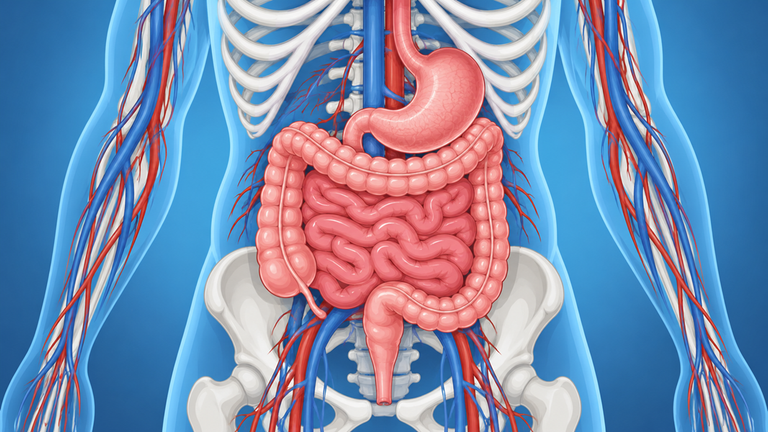
When doubts arise about a diagnosis, treatment, or the necessity of a test, asking for a second opinion on gastroenterology it can make the difference between moving forward with uncertainty or making a medical decision with greater confidence. It's not about distrusting your current specialist, but about having a complementary, expert assessment focused on your case.
In the realm of Digestive system, many pathologies share similar symptoms: abdominal pain, changes in bowel habits, reflux, nausea, weight loss, bleeding, indigestion, or persistent discomfort. Therefore, reviewing clinical information with a specialist's perspective can help you better understand what's happening and what options you have.
Digestive system with stomach and intestine, Asian doctor holding a human anatomy model for study, diagnosis and treatment in a hospital.
A digestive second opinion is when you consult a different gastroenterologist to get their assessment after you've already received a diagnosis or treatment plan from another doctor.
One second opinion on gastroenterology This is a medical assessment carried out by a digestive specialist to review a previous diagnosis, a proposed treatment, or the results of tests already carried out. Its aim is not to start from scratch, but to analyse your case with clinical perspective, experience, and specialist judgement.
This query usually reviews:
Previous medical reports.
Analytics.
Endoscopies, colonoscopies or other digestive tests.
Biopsies or histopathological results.
Scheduled treatments and symptom progression.
Relevant personal and family history.
From this information, the specialist can confirm the current approach, suggest new tests if they are necessary, or propose therapeutic alternatives that are better suited to your situation.
When can getting a second opinion help you?
Order a second medical opinion it's not always essential, but it can be highly recommended in certain scenarios. Especially when the decision you have to make has an impact on your health, your quality of life, or the treatment you are going to undergo.
When the diagnosis is unclear
Sometimes, the Digestive symptoms persist even though several tests have already been performed. In other cases, the diagnosis received doesn't fully explain what you're feeling or there are results that seem contradictory.
This can occur in problems such as:
Persistent gastro-oesophageal reflux.
Chronic abdominal pain.
Suspected inflammatory bowel disease.
Changes in bowel habits.
Complex digestive injuries.
Doubtful findings on endoscopy or colonoscopy.
In these cases, a new assessment allows all the information to be organised, any outstanding issues to be identified, and a decision to be made on whether further investigation is necessary.
Before undergoing an important test or procedure
When you're recommended an intervention, advanced endoscopy, or a relevant digestive procedure, it's normal to want to confirm it's the best option. second opinion on gastroenterology it can help you understand why that test is recommended, what benefits it has, what risks exist and if there are alternatives.
This is particularly useful if you have been told about procedures such as endoscopic resections, lesion surveillance, the treatment of complex polyps, or approaches related to pathologies such as Barrett's oesophagus.
When treatment isn't working
If you have been undergoing treatment for some time and do not notice any improvement, it may be advisable to review the case. It does not always mean the treatment is incorrect, but perhaps the dosage, duration, diagnosis or approach needs adjusting.
One specialist valuation can help you answer questions such as:
Is the initial diagnosis still the most likely?
Have other causes been ruled out?
Is the treatment well suited to my case?
Do I need new tests?
Are there less invasive or more effective options?
What does a second opinion offer in digestive pathology?
The main advantage of a second opinion on gastroenterology It's that it helps you make more informed decisions. Often, the patient not only needs a diagnosis, but to understand it well.
More clarity
A specialist can explain in detail what your tests mean, which findings are relevant and which are not cause for alarm. This clarity Relieve anxiety and allows face the process with more peace of mind.
More safety
When a medical decision is important, confirm the criteria with another expert This can give you confidence. If the second opinion matches the first, you gain assurance. If it brings new nuances, you can consider options that perhaps hadn't been thought of.
A more personalised approach
Not all patients need the same path. Age, history, symptom progression, previous tests, and personal preferences all influence the decision. Therefore, a second opinion must be individualised, Not a generic answer.
What documents should I bring?
For the consultation to be truly useful, it is important to attend with all available information. The more complete the context, the more accurate the assessment can be.
It is recommended to prepare:
Preliminary Inquiry Reports.
Laboratory results.
Endoscopy or colonoscopy reports.
Images or videos, if available.
Biopsy reports.
Current medication and previous treatments.
List of symptoms and timeline.
Specific questions you want to resolve.
It is also helpful to note down when your symptoms started, what makes them worse, what makes them better, and how they affect your daily life.
Second opinion digestive at GASTEA
And GASTEIZ, The second digestive opinion is aimed at patients who need a clear, specialised, and rigorous assessment. The objective is to review each case in detail, integrate the available evidence, and offer understandable medical guidance.
This type of consultation can be particularly useful if you have doubts about a diagnosis, have been recommended a digestive procedure, or are seeking confirmation of the best course of action before making an important decision.
Furthermore, having specialists accustomed to assessing complex cases allows the situation to be approached with a more precise vision, especially in areas such as Advanced digestive endoscopy, complex digestive injuries or certain pathologies requiring expert monitoring.
Are you replacing your current doctor?
Not necessarily. A second medical opinion It doesn’t have to replace the professional who is already treating you. In many cases, it complements the information you already have and helps you make decisions with a broader perspective.
It can be used to confirm the current plan, adjust the approach, or provide an additional recommendation. The important thing is that the patient understands their situation well and can decide with greater peace of mind.
Conclusion: Making better decisions is also part of self-care.
Order a second opinion on gastroenterology It can help when there are doubts, persistent symptoms, complex diagnoses, or relevant medical decisions. It is not a gesture of distrust, but a responsible way to care for your health and actively participate in your process.
When you better understand your diagnosis, know your options, and have a specialist's assessment, you can make decisions more calmly, with more information and more confidence.
If you have any concerns about your digestive case, please GASTEIZWe can help you review your situation in a personalised way. Request a specialised assessment and take the next step with the peace of mind that comes from expert judgement.
Tell us what you thought of this article. Rate it (FROM 1 TO 5 STARS).