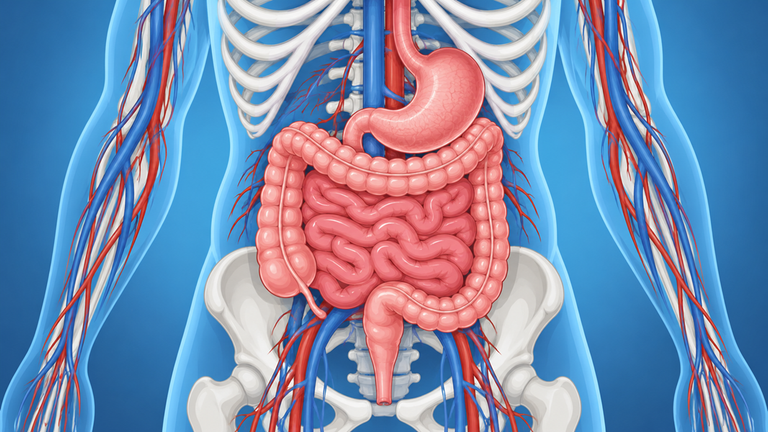
Lynch syndrome is the most common form of hereditary cancer. In affected families, individuals may present with different tumours, specifically colorectal and endometrial cancer, and notably at relatively early ages and sometimes repeatedly in the same organ over time (metachronous tumours).
The risk of colorectal cancer or endometrial cancer can be multiplied by up to 40 times compared to a healthy individual.
El Síndrome de Lynch se desarrolla debido a mutaciones genéticas hereditarias, generalmente en uno de los siguientes genes: MLH1, MSH2, MSH6, PMS2 y EPCAM. Estas mutaciones impiden que las células reparen correctamente los errores que ocurren al copiarse el ADN. Esto puede dar lugar a la acumulación de mutaciones en otras áreas del ADN, lo que aumenta el riesgo de desarrollar ciertos tipos de cáncer, como el cáncer colorrectal, el cáncer de endometrio (útero), y otros cánceres del tracto digestivo y urinario.
We inherit 23 chromosomes from each of our 2 parents, and therefore have 23 pairs of chromosomes, which make up the genome. The genome, or DNA, is found in the nucleus of each of our body's cells. Genes encode all the information for the proteins that make up our organism. Our body's cells are constantly renewed through cell division, making a complete copy of the genome.
Source: m.kidshealth.org
During DNA replication, errors occur routinely, and these errors are corrected by a DNA “repair” system. composed of several proteins, which form the Mismatch Repair System or by its English acronym MMRS. They detect DNA errors and correct them, thus preventing the generation of “harmful” mutations that would cause cell death or uncontrolled replication (cancer).
Source: frontiersin.org
When the genes that encode MMRS proteins are mutated, the repair system does not function correctly and errors accumulate in the DNA of cells during the duplication process (cell renewal). This translates for the affected individual into a higher risk of developing cancer.
Patients with Lynch syndrome have a mutation in one of these MMRS repair system proteins in all the cells in their body. (what is known as a “germline” mutation). This mutation has been inherited from one of its parents.
How is it passed on to offspring?
The probability of passing the condition on to offspring is 50%, as it is inherited in an autosomal dominant pattern: if the patient inherits the mutation from just one parent, they will develop the condition.
Within Lynch Syndrome, there are different types of mutation. They are divided according to which of the 4 main genes that encode MMRs is affected: MLH1, MSH2, MSH6, PMS2. Depending on the mutated gene, we can expect a higher risk of certain tumours than others; for example, a mutation of the MSH6 gene is associated with endometrial cancer, while the MLH1 gene is associated with colon cancer and endometrial cancer. Others cancers to consider in Lynch syndrome son: ovarian cancer, gastric cancer, kidney and bladder cancer, hepatobiliary cancer, brain tumours and skin tumours.
Source: escolasaude.sergas.gal
When should Lynch syndrome be suspected?
We should suspect the possibility of Lynch syndrome if in our family:
Hi an individual who has had colon cancer or endometrium, stomach, kidney cancer... under the age of 50
Hi several individuals on the paternal or maternal side of the family affected with the described tumours, particularly if the blood relation between them is first degree (parents, children, siblings). Example: mother with colon cancer at 56 years old, and 2 maternal uncles with colon cancer and kidney cancer at 45 and 58 years old.
One or more family members have had two or more tumours, of the same or different type. Examples: father with 2 bowel cancers at age 45 and 57; mother with endometrial cancer at age 41 and bowel cancer at age 52.
Therefore, it is very important to carry out a Family tree and to know in detail the history of cancer and the age of diagnosis.
How do you identify.
The confirmation of this illness is made by a genetic study that allows us to diagnose the causative mutation in the DNA.. Identifying the mutation allows the study to be repeated in all close relatives (parents, children, siblings) and to know their risk status before they develop cancer. The importance of a preventive diagnosis lies in the fact that by identifying colorectal or endometrial cancer at an early stage, before symptoms have developed, it is associated with a better prognosis. Genetic analysis is performed simply by extracting a small amount of blood from the patient (similar to a general blood test).
Studies to detect Lynch Syndrome in Madrid
In the event of a suspicion of Lynch syndrome within a family, due to the presence of several cases of cancer or at a very young age, the first study that can be carried out is on The tissue from the operated tumour. This is a study of Immunohistochemistry, which involves staining for proteins of the MMRS repair complex. The absence of staining is a marker suggestive of the disease, which will need to be confirmed with appropriate genetic testing. Immunohistochemical studies are performed in many anatomical pathology laboratories, such as the Jiménez Ayala Institute with whom we work in a coordinated manner at GASTEA.
At our GASTEA centre in Madrid We offer the possibility of a comprehensive evaluation of your personal and family history, as well as the ability to perform immunohistochemistry and genetic studies for Lynch syndrome and other syndromes.associated with digestive tumours.
The genetic study begins in a simple way via a blood sample obtained similarly to a conventional blood test at the San Francisco de Asís Hospital. This sample is sent to the leading company's central laboratories Myriad In Utah (USA), where the study is completed in under 4 weeks using advanced sequencing and multipanel techniques.
Tell us what you thought of this article. Rate it (FROM 1 TO 5 STARS).